5 Pillars of a Crypto Plan for the Next Cycle
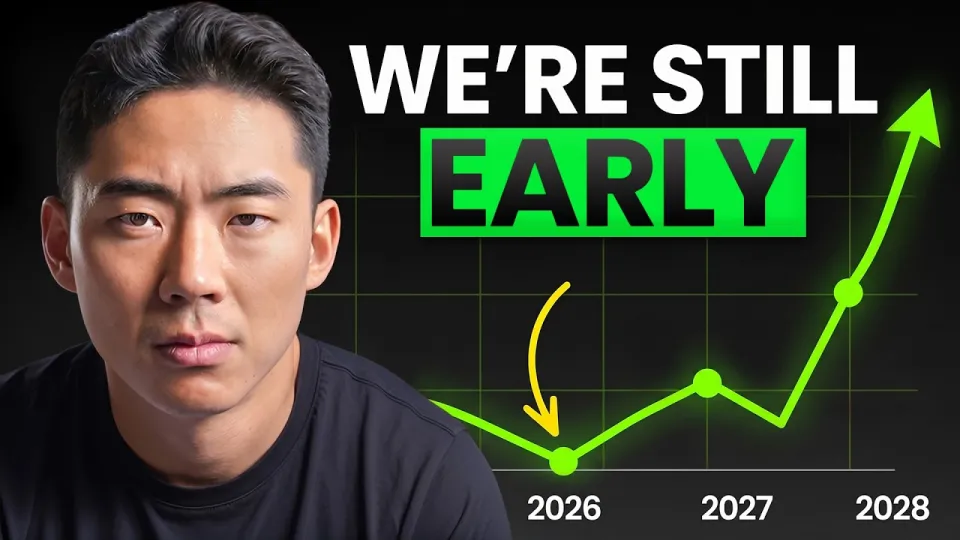
Video: my plan to make millions in crypto 2027
Need articles like this for your video? They help promote it on YouTube and Google — order them in the Telegram bot @sat_sit_bot. It writes articles around your video, embeds the video and publishes them on popular niche websites (no ads). Free trial — 50 articles.
· based on the channel Brian Jung
A crypto plan for the next cycle starts with three decisions: how much of your net worth goes into the market, how you split it between Bitcoin and higher-risk altcoins, and which narratives you are willing to bet on before they become crowded. Brian Jung's breakdown, published in October 2026, frames the whole exercise around those three choices rather than around a single price target, and points viewers to the Kaizen Pro waitlist for the research side of the process.
The core idea is simple: the traders who made outsized returns in past cycles were not the ones with the best single call, but the ones who sized positions correctly and exited in tranches. That is a repeatable process, and it can be written down before the market moves.
Why a multi-year crypto plan beats a single price prediction
A plan that spans multiple years survives drawdowns that a one-off prediction does not. Crypto cycles have historically run in roughly four-year rhythms tied to Bitcoin's halving schedule, with long accumulation phases, violent expansions and deep retracements inside each one. Anyone who entered near a local top and held without rules has usually needed the next cycle just to break even.
Brian Jung's argument for staying constructive rests on structural changes rather than on chart patterns alone: spot Bitcoin and Ethereum ETFs that let traditional allocators buy through brokerage accounts, clearer stablecoin and market-structure rules in major jurisdictions, and a growing set of on-chain applications with real fee revenue. None of that removes volatility, but it changes who the marginal buyer is.
The practical takeaway is to write your plan as a document with numbers in it: target allocation percentages, the maximum drawdown you can tolerate without selling, and the conditions under which you would reduce exposure. A plan you can read back to yourself during a 40% correction is worth more than any forecast.
The narratives that tend to drive the next cycle
Narratives are where capital rotates after Bitcoin has already run. In past cycles the sequence has looked similar: Bitcoin leads, Ethereum follows, then liquidity spreads into sectors with a compelling story. The sectors most often cited for the coming cycle include:
- Real-world assets (RWA). Tokenized treasuries, private credit and fund shares moving on-chain, driven by yield-seeking stablecoin holders.
- Layer 2 scaling and modular infrastructure. Cheaper execution plus data-availability layers, with value accruing to the chains that capture actual usage.
- AI-adjacent crypto. Decentralized compute, data markets and agent payments, one of the loudest themes of the past two years.
- DeFi revival. Lending, perpetuals and stablecoin yield products that generate fees rather than just emissions.
- Consumer and payments. Wallets, stablecoin remittances and applications aimed at users who never touch a decentralized exchange.
Sui (SUI) and a handful of high-throughput Layer 1s come up repeatedly in this discussion as examples of chains with active developer bases. The discipline is to separate a narrative from a token: a sector can grow while most tokens in it go to zero, so the question is always which asset captures the fees.
How to size Bitcoin, Ethereum and altcoin positions
Position sizing is the part of the plan that determines whether you survive to the next cycle. A common framework splits a crypto allocation into a core and a satellite:
- Core (roughly 50–70% of the crypto sleeve): Bitcoin and Ethereum, held through spot or regulated ETF wrappers, rebalanced rather than traded.
- Satellite (the remainder): narrative bets sized so that no single altcoin can wipe out more than a small fraction of the total portfolio.
- Cash and stablecoins: a reserve used to add during drawdowns, kept in yield-bearing form where the counterparty risk is understood.
A widely used rule of thumb is to risk no more than 1–2% of total capital on any single speculative position, and to decide the exit before entering. If a position doubles, taking the initial capital off the table turns a gamble into a free option.
Typical doubts about bullish crypto plans
The most common objection to any bullish crypto plan is that the same optimism was on offer in the previous cycle and many retail buyers still ended up underwater. That criticism is fair, and it points at execution rather than direction: buying after a 300% move, using leverage, and holding through a full round trip are what turn a correct thesis into a loss.
A second recurring doubt is regulatory. Some argue that clearer rules and bank participation dilute the original point of crypto. In practice, regulated access has historically expanded the buyer pool, while the permissionless layer keeps operating alongside it. Both can be true at once.
A third doubt is timing. Calls for a cycle top in 2029 or a top this year are guesses dressed as analysis. The plan should not depend on nailing the date; it should depend on scaling out as prices rise and on having rules for when the thesis breaks.
The links and resources mentioned in the breakdown
- Kaizen Pro waitlist: https://whop.com/kaizen/products/kaizen-pro/
- Free crypto market report newsletter: https://newsletter.kaizen.gg/subscribe
- Brian Jung on X: https://twitter.com/thebrianjung
- Brian Jung on Instagram: https://www.instagram.com/creditbrian
- Risks and disclaimers document: https://docs.google.com/document/d/1WIgz8SB1mMzke0uvLt_6zXmSbqLL4gL5VgpDnVEk5m8/edit?usp=sharing
Final thoughts on building a cycle-proof crypto plan
A workable plan for the next cycle is boring on purpose: a written allocation, a core of Bitcoin and Ethereum, satellite bets on narratives you can explain in one sentence, and exit rules set in advance. Brian Jung's video is a useful prompt to write that plan down now, while the market is calm enough to think clearly, rather than during a parabolic week. Treat every bullish forecast, including this one, as a hypothesis to be sized for, not a promise. If you want the structured research version, the Kaizen Pro waitlist is the entry point the channel points to.
Key takeaways
- Brian Jung's 2026 video lays out a multi-year crypto plan built around narratives rather than single coins.
- The plan splits a portfolio into core holdings (Bitcoin, Ethereum) and satellite bets on emerging narratives.
- Narrative-driven entries are meant to be scaled in and out in tranches, not bought in one lump sum.
- Regulatory clarity, stablecoin legislation and institutional access are treated as structural tailwinds, not guarantees.
- Position sizing and pre-set exit rules matter more than picking the single best altcoin.
Source: my plan to make millions in crypto 2027 · Markdown version
Questions & answers
What percentage of a crypto portfolio should be in altcoins?
There is no universal number, but a common split is 50–70% in Bitcoin and Ethereum as a core, with the rest in a small number of narrative bets. Each speculative position is usually capped at 1–2% of total capital so that no single token can seriously damage the portfolio.
Is regulatory clarity actually bad for crypto?
It changes the market rather than shrinking it. Clearer rules on stablecoins and market structure bring in banks, funds and brokerage access, which expands the buyer pool, while permissionless protocols keep running alongside. The trade-off is more compliance overhead for projects that want institutional users.
How do I avoid repeating losses from the previous cycle?
Most cycle losses come from execution, not direction: buying after a large rally, using leverage, and holding through a full retracement. Fixing that means scaling in and out in tranches, taking initial capital off doubled positions, and writing exit conditions before entering a trade.
Can anyone predict when the cycle top will happen?
No. Guesses range from a top this year to 2029, and none of them is reliable enough to build a plan on. A better approach is to set price levels and time-based rules for trimming exposure so that the outcome does not depend on calling the exact peak.